Beyond the Blade: Why Canada's Best Young Hockey Players Are Training Smarter, Not Just Harder
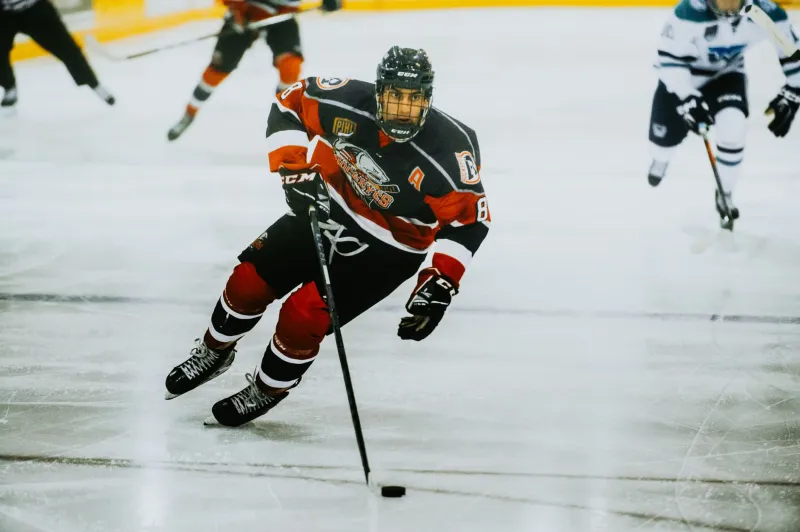
For decades, the conventional wisdom in Canadian minor hockey was straightforward: log more ice time, skate harder, shoot more pucks. If a young player wanted to get better, the answer was always more—more practice, more games, more repetition. That model produced generations of talented athletes, no question. But it also left enormous potential untapped.
The landscape has shifted decisively. Across the country, from Kelowna to Moncton, elite development programs are redefining what it means to prepare a young athlete for the demands of high-performance hockey. The most forward-thinking academies have come to understand something that professional organizations have known for years: the player who dominates at the next level is rarely the one who simply skated the most. It is the athlete who developed every dimension of their game—physical, nutritional, psychological, and analytical.
At Hockey 360 Développement, this philosophy is not a trend we are chasing. It is the foundation upon which our entire program is built.
Strength and Conditioning: Building an Engine That Lasts
The era of the "naturally gifted" player who coasted on talent alone is effectively over at the elite level. Modern hockey is faster, more physical, and more demanding than at any previous point in the sport's history. Players who arrive at major junior or university programs without a structured off-ice conditioning background find themselves at an immediate disadvantage.
Canadian strength and conditioning coaches who work closely with development academies consistently emphasize one principle: specificity. Off-ice training must replicate the physiological demands of the game itself. Hockey is an interval-based sport—explosive bursts of high-intensity effort followed by brief recovery periods. Training programmes that reflect this reality, incorporating lateral movement patterns, single-leg stability work, and rotational power development, produce athletes whose bodies are genuinely prepared for competitive play.
For athletes aged 14 to 18, the emphasis shifts progressively. Younger players benefit most from foundational movement quality and injury-prevention work, while older athletes can begin incorporating more targeted strength and power development. The key, as any responsible conditioning professional will confirm, is individualization. A one-size-fits-all weight room programme is no more appropriate than a one-size-fits-all practice plan.
Nutrition Science: Fuelling Performance From the Inside Out
Ask most Canadian hockey parents what their child ate before a tournament game, and the answers are often illuminating—and not always in a positive way. Pre-game nutrition remains one of the most neglected components of player development at the minor hockey level, despite the fact that its impact on performance is thoroughly documented.
Leading sports dietitians working within Canadian hockey programmes point to several consistent issues: inadequate carbohydrate intake before and during competition, poor hydration habits, and a general lack of understanding around recovery nutrition. These are not trivial concerns. An athlete who is inadequately fuelled will experience measurable declines in skating speed, decision-making accuracy, and physical resilience over the course of a game.
The good news is that nutritional education is increasingly being integrated into structured development programmes. When young athletes understand why they are making certain dietary choices—not simply what to eat—they develop habits that serve them throughout their careers. This education is most effective when it involves the entire family unit, recognising that parents and guardians play a central role in what food is available and accessible.
Mental Performance: The Competitive Edge Nobody Talks About
Of all the components that define a complete hockey player, mental conditioning remains the most undervalued—and the most transformative when properly developed. Canadian sport psychology has matured considerably over the past two decades, and the frameworks that once served only Olympic and professional athletes are now being adapted for the development pathway.
Pressure management, attentional focus, confidence building, and resilience following setbacks are not personality traits that athletes either possess or lack. They are skills, and like any skill, they can be taught, practised, and refined. Programmes that introduce young players to structured mental performance work—whether through one-on-one sessions with a certified consultant, team-based workshops, or integrated coaching conversations—are producing athletes who perform more consistently under pressure.
The recruitment implications are significant. Scouts and coaching staffs at the major junior and university levels are increasingly prioritising psychological readiness alongside physical and technical attributes. A player who can maintain composure in a seventh game of a playoff series, who can bounce back from a poor performance without letting it spiral, and who can absorb and apply coaching feedback effectively is an athlete any programme wants to build around.
Analytics and Video: Seeing the Game Differently
The data revolution that transformed professional hockey is now filtering down to the development level, and the programmes embracing it earliest are gaining a meaningful edge. At its most accessible, this simply means using video review to help players understand their positioning, their decision-making tendencies, and the patterns in their game that are difficult to perceive in real time.
More sophisticated applications involve tracking metrics such as zone entry rates, shot quality, and shift length distributions—data points that illuminate aspects of a player's game that traditional observation alone cannot capture. When coaches can show a young centreman that he is winning 62 per cent of his draws on the backhand side but only 41 per cent on the forehand, that conversation becomes highly specific and actionable.
For parents evaluating development programmes, the question is not whether a programme uses technology for its own sake, but whether that technology is being used to drive meaningful individual improvement. Data without interpretation and application is simply noise.
The Integrated Athlete: Where It All Comes Together
What distinguishes the most effective Canadian development programmes is not excellence in any single domain—it is the coherent integration of all these elements into a unified athlete development model. When a player's on-ice technical training is supported by appropriate physical conditioning, sound nutritional habits, a strong mental performance foundation, and intelligent use of analytical tools, the cumulative effect is substantially greater than the sum of its parts.
This is the vision that drives the work at Hockey 360 Développement. We are not simply teaching players to skate faster or shoot harder. We are developing complete athletes—young people whose preparation is thorough enough to meet the demands of elite hockey and broad enough to serve them well beyond it.
The next generation of Canadian hockey players will not be defined solely by their skating stride or their shot release. They will be defined by the depth of their preparation, the breadth of their development, and the intelligence with which they approach their game. The programmes that understand this today are the ones producing the players who will lead the sport tomorrow.