Beyond the Boards: How Canada's Top Hockey Programs Are Building Complete Athletes
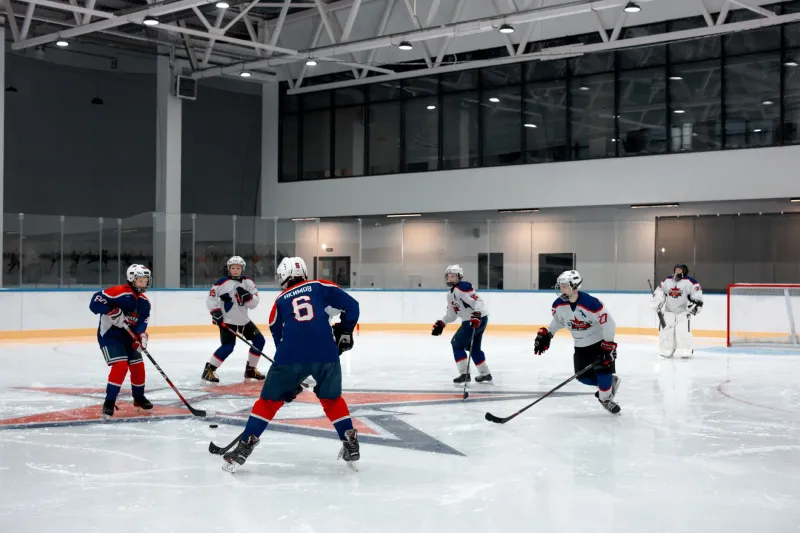
For generations, the path to hockey excellence in Canada followed a familiar script: more ice time, more repetitions, more games. The rink was the classroom, and the puck was the only textbook that mattered. That script, however, is being rewritten.
Across the country, from minor hockey associations in Saskatchewan to elite academies in Ontario and Québec, a new philosophy of athlete development is taking hold — one that treats the hockey player not as a skater who lifts weights occasionally, but as a complete athletic organism requiring deliberate, multi-dimensional cultivation.
At Hockey 360 Développement, this philosophy is not a trend. It is a foundational commitment.
The Limits of Ice-Only Training
The traditional model of Canadian hockey development placed enormous emphasis on on-ice volume. Practices, power skating sessions, and back-to-back tournament weekends filled the calendars of young athletes from September through March. While ice time remains irreplaceable, player development specialists are increasingly vocal about what this model fails to address.
"When a player trains exclusively on the ice, they develop sport-specific patterns, but they also develop sport-specific limitations," explains one certified strength and conditioning coach who works with a regional hockey academy in Ontario. "Muscular imbalances, restricted mobility, and mental fatigue from repetitive competitive cycles — these are the hidden costs of a one-dimensional approach."
The data supports this concern. Research published through Hockey Canada's long-term athlete development framework has consistently highlighted the importance of what practitioners call the "windows of trainability" — developmental periods during which young athletes are most responsive to specific types of training stimuli. Missing these windows by focusing exclusively on one modality can leave significant athletic potential unrealised.
Strength and Conditioning: Building the Engine
Modern Canadian hockey academies are investing heavily in structured strength and conditioning programs tailored specifically to the demands of the game. These are not generic gym sessions. They are periodised, progressive training plans designed around the physiological requirements of hockey — explosive lateral movement, rotational power, balance under contact, and sustained anaerobic capacity.
For athletes in the peewee and bantam age groups, the emphasis is typically on foundational movement quality: proper squatting mechanics, hip hinge patterns, and core stability work that will support more intensive loading in later years. As athletes progress into midget and junior levels, the programming evolves to incorporate heavier resistance training, plyometric development, and sport-specific conditioning protocols.
"We are not trying to build bodybuilders," notes one player development specialist affiliated with a Western Canadian academy. "We are building athletes who can accelerate faster off the wall, win battles along the boards, and maintain their technical execution in the third period when everyone else is slowing down."
Mental Conditioning: The Invisible Edge
Perhaps the most significant shift in elite Canadian hockey development is the growing recognition that psychological preparation is not supplementary — it is central. Sport psychology services, once reserved for professional and Olympic-level athletes, are now being integrated into academy programming at the youth level.
The applications are practical and immediate. Breathing and arousal regulation techniques help young players manage pre-game anxiety. Visualisation protocols allow athletes to rehearse high-pressure situations — penalty shots, overtime face-offs, defensive-zone breakdowns — in a controlled mental environment before encountering them in competition. Goal-setting frameworks teach athletes to take ownership of their development trajectories rather than passively waiting for coaches to direct their progress.
At Hockey 360 Développement, mental conditioning is embedded into the weekly training schedule, not treated as an occasional add-on. The philosophy holds that a player who cannot manage their emotional state under pressure cannot reliably execute the skills they have spent thousands of hours developing.
Nutrition Science: Fuelling the Process
Off-ice performance is equally dependent on what athletes consume. Sports nutrition education has emerged as a critical component of comprehensive hockey development programs, yet it remains underdeveloped in many grassroots environments.
Young Canadian hockey players frequently compete in early morning games, travel extensively on weekends, and navigate the nutritional minefield of arena concession stands and highway fast-food stops. Without structured guidance, even physically talented athletes can undermine their own development through inadequate fuelling, poor hydration practices, and insufficient recovery nutrition.
Leading academies are addressing this gap by incorporating registered dietitians and sports nutrition consultants into their support staff, offering workshops for both athletes and their families, and developing practical meal planning resources that account for the realities of a young hockey player's lifestyle.
Agility, Mobility, and the Off-Ice Athlete
Off-ice agility and movement training represents another dimension of the complete-athlete model. Programmes built around gymnastics fundamentals, yoga, and multi-directional agility ladder work are developing body awareness, spatial orientation, and coordination that transfer directly onto the ice surface.
Several Canadian academies have drawn inspiration from international models — particularly those employed by elite European programs — where multi-sport participation and movement versatility are deliberately encouraged rather than viewed as distractions from hockey specialisation.
"The players who come to us with a background in soccer, gymnastics, or basketball tend to pick up skating mechanics and positional awareness more quickly than those who have only ever played hockey," observes one skill development coach. "Their bodies already understand how to move athletically in space."
A Competitive Edge on the World Stage
The ultimate test of any development philosophy is competitive performance. Canada's results at international youth tournaments — including the World Junior Championship and various IIHF under-18 competitions — reflect both the strengths and the evolving challenges of Canadian hockey development.
Nations that have invested systematically in holistic athlete development models, including Sweden, Finland, and the United States, have closed the gap on Canada at the elite youth level. The response from forward-thinking Canadian institutions is not defensive — it is adaptive.
By building athletes who are stronger, more mentally resilient, better fuelled, and more movement-literate than their predecessors, Canadian academies are not abandoning the country's hockey heritage. They are honouring it by refusing to be complacent.
At Hockey 360 Développement, the full-circle approach is more than a programme design philosophy. It is a statement of intent: that Canadian hockey's next generation of champions will be forged through complete, courageous, and deliberate development — every dimension, every day.