Fuelled to Compete: How Sports Science Is Quietly Reshaping the Development Edge in Canadian Hockey
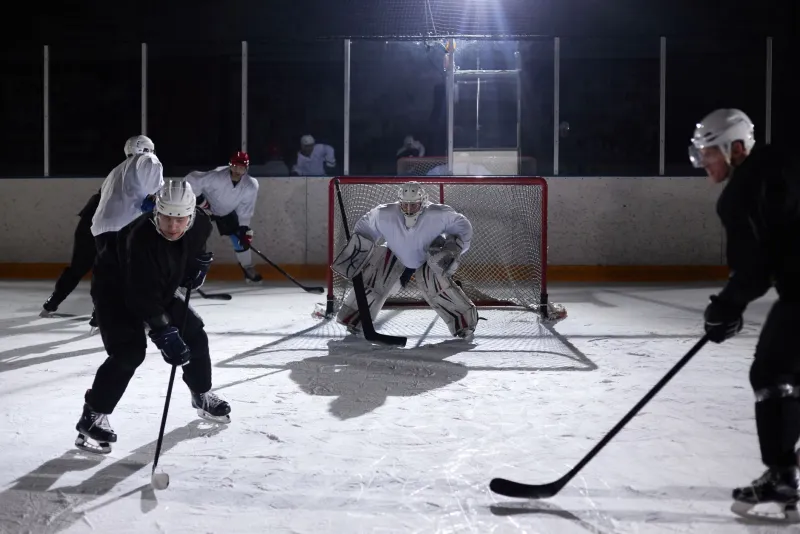
For decades, the mythology of Canadian hockey development has centred on what happens between the boards. The early morning skates. The battle drills. The relentless repetition of edge work and positional play. These elements remain foundational—but inside the country's most forward-thinking academies, a quieter revolution is underway, one measured not in goals scored but in recovery windows, macronutrient ratios, and sleep-stage data.
The question is no longer whether off-ice science matters. It does. The question is which programs are engineering it with the same rigour they apply to a power-play breakout.
The Performance Gap Nobody Talks About
Ask most parents evaluating a hockey academy about their priorities and you will hear about ice time, coaching credentials, and competitive scheduling. Rarely does nutrition infrastructure appear on that list. That oversight, according to performance coaches working with top Canadian prospects, is costing young athletes measurable development time.
"We can put a player through the best skating clinic in the country, but if they are showing up dehydrated and under-fuelled, they are absorbing maybe sixty percent of what that session could offer," says one performance coach working with a national-level midget program in Ontario. "The adaptation happens during recovery. If recovery is poor, the session was partially wasted."
This is not a fringe opinion. Exercise science literature has long established that training stimulus and recovery quality are inseparable variables. What has changed in recent years is the accessibility of the tools required to monitor and optimize these variables—and the willingness of elite Canadian academies to invest in them.
What a Science-Integrated Programme Actually Looks Like
The distinction between a program that acknowledges nutrition and one that engineers it is significant. Acknowledgement looks like a handout on pre-game meals and a reminder to drink water. Engineering looks like something else entirely.
At the most sophisticated level, academies are working with registered dietitians to develop individualized fuelling protocols tied directly to training load. A player coming off a double-session day is not eating the same recovery meal as a player who had a single on-ice practice. Carbohydrate timing, protein distribution across meals, and hydration targets are calibrated to the weekly schedule rather than applied as a generic recommendation.
Sleep optimization has entered the conversation with similar seriousness. Wearable technology—devices that track heart rate variability, sleep staging, and respiratory patterns—is being used in select Canadian programs to give coaches and performance staff objective data on athlete readiness. A player whose recovery metrics suggest accumulated fatigue may see modified practice intensity rather than being pushed through a session that compounds the deficit.
"We stopped guessing about readiness," notes one strength and conditioning specialist affiliated with a Quebec-based development program. "When you have data, you can make decisions. When you are guessing, you are managing risk poorly."
The Nutritionist's Role in the Development Ecosystem
Registered dietitians working in high-performance hockey settings describe a landscape that is shifting meaningfully. Five years ago, their involvement with junior and academy-level programs was largely event-based—a seminar here, a meal plan template there. Today, the most progressive academies are integrating nutrition professionals into the weekly rhythm of athlete management.
This integration matters for several reasons beyond simple fuelling. Adolescent athletes in intense training environments face real risks related to energy availability. Underfuelling in young players—sometimes inadvertent, sometimes the result of poor education around training demands—can suppress hormonal development, compromise bone density, and blunt the very adaptations the training is designed to produce.
Prevention of these outcomes requires more than a poster on the locker room wall. It requires regular check-ins, practical education around food preparation and timing, and a coaching culture that treats nutrition as a technical skill rather than a lifestyle preference.
"The players who arrive understanding how to fuel themselves have an immediate advantage," observes a dietitian who consults with several Ontario-based hockey programs. "But more importantly, the academies that teach it properly are sending players into their next level of competition with a skill set their peers don't have."
Recovery as a Competitive Philosophy
Perhaps the most significant cultural shift occurring inside elite Canadian hockey development is the repositioning of recovery from passive rest to active strategy. Cold-water immersion, structured mobility work, breathwork protocols, and periodized deload weeks are no longer considered soft additions to a training calendar. They are treated as performance investments.
This reframing matters because it changes how athletes relate to rest. In a hockey culture that has historically valorised pushing through discomfort at all costs, teaching young players that strategic recovery is a form of competitive preparation represents genuine philosophical progress. It also aligns with what the science consistently demonstrates: athletes who manage recovery well accumulate training adaptations more efficiently over a season than those who treat every session as a maximum-output event.
The implications extend beyond physical performance. Sleep deprivation and chronic fatigue impair decision-making, emotional regulation, and learning capacity—all of which are critical to the cognitive demands of hockey. A tired athlete does not just skate slower; they read the game more poorly and retain coaching less effectively.
The Programmes Pulling Ahead
Not every Canadian academy has the resources to employ a full-time dietitian or purchase biometric wearables for an entire roster. That reality is worth acknowledging honestly. But resource level does not fully explain the gap between programs that prioritise this domain and those that do not.
The distinguishing factor, more often than budget, is philosophical commitment. Academies that have embraced the 360-degree model of athlete development—one in which nutrition, recovery, mental performance, and on-ice skill are treated as interconnected rather than hierarchical—tend to build these elements into their culture systematically. They educate parents. They train coaching staff to recognize signs of underfuelling and overtraining. They create environments where athletes feel comfortable reporting fatigue rather than hiding it.
The programs that fall behind are not necessarily under-resourced. They are under-committed to the idea that athletic excellence is a whole-system problem.
What Families Should Be Asking
For parents navigating the increasingly crowded landscape of Canadian hockey academies, the conversation around sports science integration deserves a prominent place in the evaluation process. Specific questions worth raising include whether the program employs or regularly consults a registered dietitian, how recovery is monitored across the training week, and what education athletes receive around fuelling for performance versus simply eating for appetite.
The answers will reveal a great deal about how seriously a program takes the full developmental picture. An academy that can speak fluently and specifically to these questions is one that has done the work to think beyond the rink.
Because in the end, the athlete who arrives at their next opportunity not only more skilled but better fuelled, better rested, and more educated about their own physiology is the athlete who continues to develop when others plateau. That is not a marginal advantage. In Canadian hockey, where the competition for opportunity is fierce and the margins are narrow, it is the kind of edge that defines a career.