Sideline Pressure: What Hockey Academy Coaches Wish Every Parent Understood About Player Development
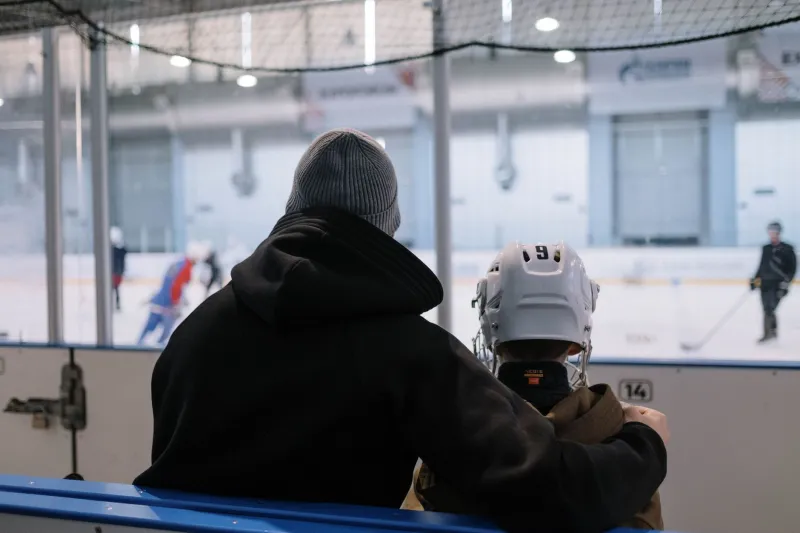
For many Canadian families, enrolling a child in a hockey development academy represents far more than a registration fee. It is a statement of belief—a declaration that this child has something worth nurturing, something worth sacrificing weekends, road trips, and household budgets to pursue. That belief is not misplaced. Parental investment, at its best, is one of the most powerful forces in an athlete's life.
But belief, when left unexamined, can curdle into pressure. And pressure—particularly the kind that arrives from the stands, the car ride home, or the dinner table—has a way of reshaping a young player's relationship with the game in ways that no coach can easily undo.
Academy directors and sports psychologists working within Canada's elite youth hockey environment are increasingly candid on this subject. The conversation is no longer whispered in staff rooms. It is being raised directly, and deliberately, with families.
The Investment Trap
When a family commits thousands of dollars annually to an academy programme—covering ice time, coaching staff, equipment, travel, and accommodation—an understandable psychological shift occurs. The expenditure begins to feel like a transaction. Parents start expecting visible, measurable returns: more ice time, higher line placement, faster skill progression.
"The financial reality of elite youth hockey in Canada is significant, and we never dismiss that," says one academy director from Ontario who works with players aged twelve through seventeen. "But when parents start equating dollars spent with outcomes owed, we have a problem. Development doesn't work on a billing cycle."
This transactional mindset, while entirely human, places coaching staff in an untenable position. Decisions about line combinations, position adjustments, and playing time—choices made entirely on the basis of a player's developmental needs—begin to be interpreted as slights, oversights, or evidence of bias. Trust erodes. And when trust erodes between a coaching staff and a family, the athlete caught in the middle is invariably the one who suffers most.
What Over-Involvement Actually Looks Like
Over-involved parenting in hockey rarely announces itself dramatically. It seldom begins with a screaming incident at a weekend tournament or a confrontational email to a director. More often, it accumulates quietly.
It looks like a parent who debriefs every shift with their child after a game, cataloguing errors and missed opportunities. It looks like a ten-year-old who skates off the ice scanning the stands before allowing herself to feel anything about her own performance. It looks like a fifteen-year-old who can no longer articulate what he enjoys about hockey—only what his parents hope he will achieve.
Dr. Mireille Fontaine, a sports psychologist based in Montréal who works with several Quebec-based hockey programmes, describes what she calls "performance by proxy"—a dynamic in which a parent's emotional state becomes so entangled with their child's athletic results that the child loses access to their own intrinsic motivation.
"When a young player's primary concern on the ice is managing a parent's feelings," she explains, "they cannot be fully present in the game. They are playing two games simultaneously—one on the ice and one in their head—and neither one gets their full attention."
The Developmental Timeline Problem
Canadian hockey culture has long celebrated early achievement. The stories that circulate—the player who made a Bantam AAA team at eleven, the forward who drew NHL interest before finishing high school—create a distorted sense of what normal development looks like.
Academy environments understand, often better than the broader hockey community, that development is non-linear. A player who appears to plateau at fourteen may undergo a dramatic physical and technical surge at sixteen. A child who struggles to read plays at twelve may develop exceptional hockey sense by fifteen, once their cognitive processing catches up with the speed of the game.
Parents who are not educated about this reality tend to interpret temporary plateaus as permanent limitations—and begin to panic accordingly. They push for more private lessons, demand explanations from coaches, or, in some cases, pull their child from the programme entirely in search of one that promises faster results.
"We spend as much time educating parents as we do coaching players," admits one programme director from Alberta. "That is not a complaint. It is simply the reality of working with families who care deeply but may not have a background in long-term athlete development."
Practical Frameworks for Parents Who Want to Help
The goal is not to remove parents from the equation. Parental support, properly calibrated, remains one of the most consistent predictors of athlete resilience and long-term engagement in sport. The question is not whether parents should be involved, but how.
Several academy programmes across Canada have begun implementing structured parent education components as part of their onboarding process—not as a punitive measure, but as a genuine service to families who want to do right by their children.
Among the frameworks being shared with parents:
Adopt a twenty-four-hour rule. Following a game or practice, allow twenty-four hours before discussing performance in any evaluative way. This gives the athlete space to process their own experience before being asked to account for it.
Ask open, non-evaluative questions. "Did you have fun?" and "What was your favourite moment?" create very different conversations than "Why did you miss that shot?" or "Did the coach say anything to you after?"
Separate your feelings from their results. This is perhaps the most difficult task, and the most important. A child who scores two goals should not feel responsible for a parent's elation. A child who turns the puck over should not feel responsible for a parent's disappointment. Their performance is theirs.
Trust the coaching staff. Enrolling a child in an academy programme means entering into a professional relationship with a coaching staff. That relationship requires a foundational level of trust. If that trust is genuinely absent, the family and the programme may not be the right fit for one another—and acknowledging that early benefits everyone.
The Conversation Worth Having
Across Canada's hockey development landscape, the most forward-thinking programmes are not shying away from this subject. They are building it into their culture—hosting parent information nights, offering access to sports psychology resources, and creating structured channels for families to raise concerns without those concerns landing directly in a coach's inbox at eleven o'clock on a Saturday night.
The underlying message is consistent: the families who support their children most effectively are not the ones who push hardest. They are the ones who have done the internal work to separate their own ambitions from their child's journey—and who have learned to show up at the rink not as scouts or critics, but simply as parents.
Development, at its core, requires safety. It requires the freedom to fail, to adjust, to try again. For young hockey players in Canada, that safety begins not on the ice, but in the car on the way home.