Forged in the Cold: How Canada's Brutal Winters Build the Mental Toughness No Warm-Weather Programme Can Replicate
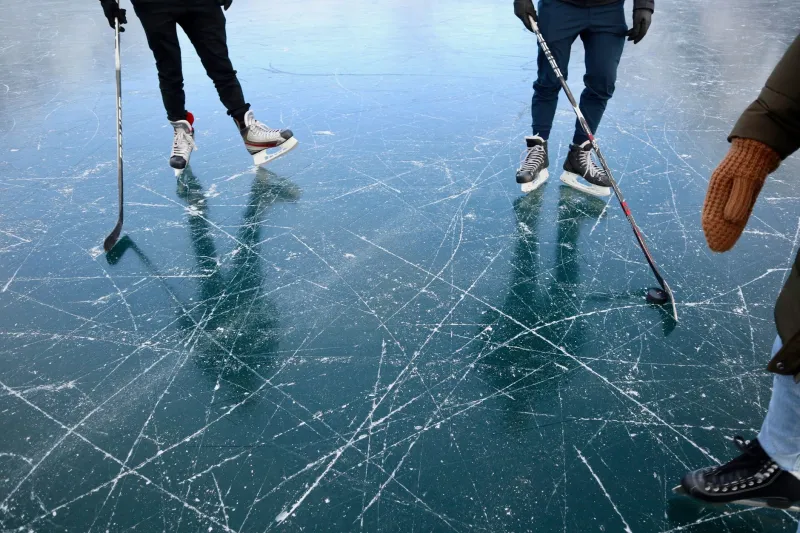
There is a particular kind of quiet that settles over a frozen outdoor rink at six o'clock on a January morning in northern Ontario. The temperature reads minus thirty-eight. The boards creak under the pressure of contracted metal. A twelve-year-old player laces up her skates on a wooden bench, breath rising in visible clouds, fingers already stiffening before the first drill begins. For coaches who have spent careers developing young Canadian athletes, that moment — that specific, uncomfortable, demanding moment — is not an inconvenience to be managed. It is the curriculum.
Across the country, from the wind-swept prairies of Saskatchewan to the ice-sheeted communities of northern Québec, Canadian hockey development has long been shaped by a climate that refuses to accommodate softness. What is increasingly understood, both by sport psychologists and by veteran coaches, is that this environmental adversity is not incidental to the development of elite players. It is foundational to it.
The Psychology of Adversity Training
Sport psychology has spent decades examining what separates athletes who perform under pressure from those who falter. The research consistently points to a cluster of traits — tolerance for discomfort, emotional regulation, sustained focus despite distraction, and the capacity to reframe hardship as purposeful challenge — that are not innate qualities so much as learned behaviours. They are, in other words, trainable. And few environments train them as efficiently as a Canadian winter.
Dr. Jim Taylor, one of North America's leading authorities on athletic performance psychology, has written extensively on what he calls "adversity inoculation" — the principle that controlled exposure to difficulty builds the psychological immune system of a competitor. Canadian winters, for young hockey players, function as a natural and perpetual adversity inoculation programme. The cold does not care about a player's mood, their sleep quality, or their confidence level that morning. It simply is. And learning to perform despite it cultivates a form of mental discipline that cannot be downloaded from a training app or replicated in a climate-controlled facility in Arizona.
What Coaches Are Seeing on the Ice
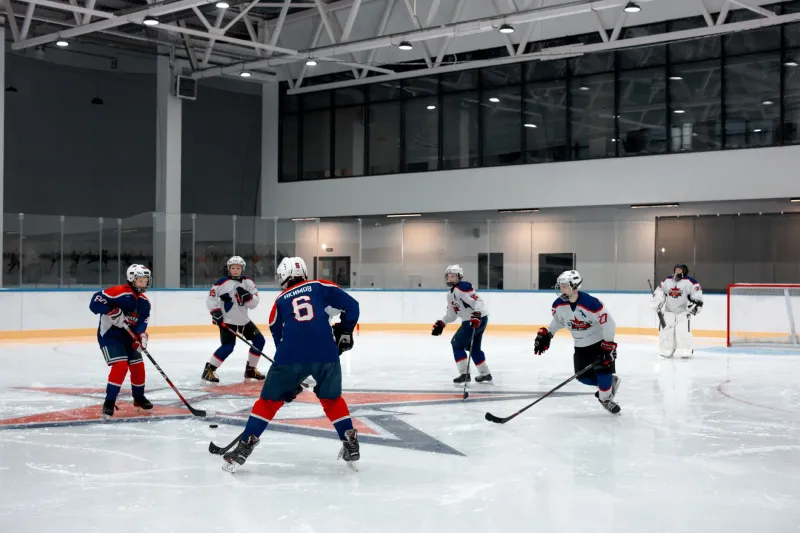
Coaches across Canadian development programmes speak with notable consistency about the psychological dividends of winter training. The challenges are not abstract — they are viscerally specific. Managing equipment that stiffens in extreme cold. Maintaining skating technique when muscle temperature drops. Sustaining concentration during outdoor practices when the wind makes verbal communication nearly impossible. Executing complex systems when the body's instinct is to conserve heat rather than extend effort.
"You learn very quickly that the game doesn't stop because you're cold," says one peewee coach based in Timmins, Ontario, who has been developing players for over two decades. "When a kid figures out that they can still make a sharp pass at minus thirty, that they can still read the play and make a decision under physical stress, something shifts in them. They stop waiting for ideal conditions. They stop waiting, period."
That cessation of waiting — the internalization that conditions will rarely be perfect and that performance must proceed regardless — is among the most transferable psychological skills a young athlete can acquire. It manifests not only in late-season playoff hockey, when arenas are loud and the stakes are high, but in academic settings, in leadership moments, and in the broader competitive landscape these players will inhabit for the rest of their lives.
The Outdoor Rink as Classroom
There is something worth examining in the cultural role that outdoor rinks play in Canadian hockey identity. The backyard rink, the community pond, the municipally maintained outdoor pad — these are not nostalgic relics. They are, for thousands of young players, primary development environments that demand a fundamentally different relationship with the game than the heated arena provides.
On an outdoor rink, the player must self-regulate in ways that structured indoor practice does not require. There is no coach blowing a whistle every forty-five seconds. There is no resurfacing between periods. There is no lobby to warm up in. What there is, instead, is the game itself — raw, unmediated, and entirely dependent on the player's internal motivation to keep moving, keep competing, and keep developing.
Psychologists refer to this as "intrinsic motivation," and it is precisely the quality that separates players who plateau at the midget level from those who continue to grow into their twenties and beyond. The outdoor rink, precisely because it offers so little external comfort, forces the young athlete to locate the drive within themselves. Canada's winters, in this sense, are not merely a backdrop to development. They are the mechanism of it.
Practical Strategies for Transforming Cold into Competitive Advantage
For players, parents, and coaches looking to leverage Canada's seasonal realities rather than simply endure them, several evidence-informed approaches are worth considering.
Reframe the narrative around discomfort. Language matters enormously in youth sport. When coaches and parents describe cold conditions as miserable or unfortunate, players receive a clear signal that suffering is something to be escaped. When those same conditions are framed as training opportunities — as proof that the athlete is doing something their counterparts in warmer climates cannot — the psychological response shifts meaningfully.
Use pre-practice routines to establish mental focus. Cold environments create physiological stress that can crowd out the cognitive preparation necessary for quality training. Establishing a consistent pre-practice mental routine — a brief period of focused breathing, a clear intention-setting exercise, or a specific technical cue the player carries into the session — helps the athlete transition from reactive discomfort to purposeful engagement.
Debrief the mental as well as the physical. After a particularly demanding outdoor session or a practice conducted in difficult conditions, coaches are encouraged to spend two to three minutes discussing not just what was executed technically, but what was required mentally. What did players notice about their focus? Where did they feel the urge to disengage, and how did they respond? This kind of structured reflection accelerates the internalization of psychological skills.
Create voluntary challenges within training. Giving players agency in how they engage with adversity — offering optional early-morning outdoor sessions, for instance, or voluntary conditioning work in less-than-ideal conditions — builds ownership over the development process. Players who choose discomfort, rather than having it imposed upon them, develop a qualitatively different relationship with challenge.
A Competitive Edge That Cannot Be Imported
As global hockey continues to expand, and as players from Sweden, Finland, the United States, and beyond compete at increasingly high levels, Canadian development programmes are right to ask what remains distinctively advantageous about the Canadian hockey environment. The answer, this writer would argue, is not primarily about ice time, coaching density, or competitive structure — though all of those matter. It is about what happens to a young athlete's psychology when they are asked, repeatedly, to perform in conditions that are objectively difficult.
The player who has skated through a minus forty windchill, who has managed their focus during a February outdoor practice when every instinct in their body said to stop, who has learned that their best hockey can be played despite physical discomfort — that player carries something into every subsequent competitive moment that no warm-weather development model can manufacture.
At Hockey 360 Développement, we believe that boldness is not a personality trait. It is a habit, built through repetition, through challenge, and through the accumulated experience of discovering that one is capable of more than one imagined. Canada's winters, for all their severity, are among the finest teachers of that lesson. The question is whether our programmes are intentional enough to use them well.