The Grind No One Sees: How Canada's Best Young Players Turn Quiet Months Into Scouting Gold
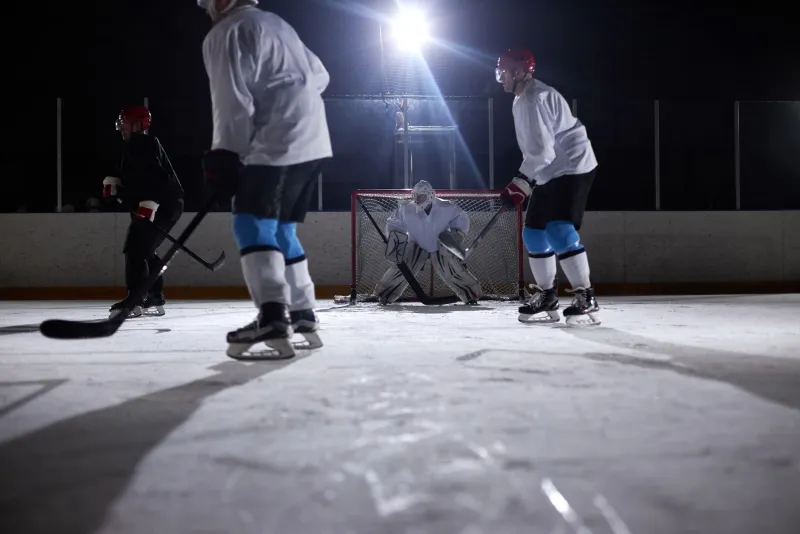
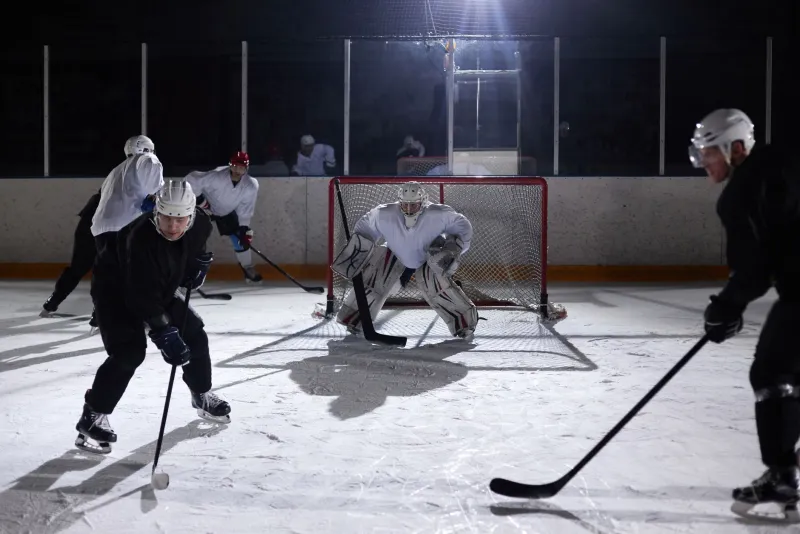
There is a particular kind of courage required to train seriously when the arena is empty and no evaluator has a clipboard nearby. It is not the courage of overtime heroics or a penalty-shot moment under bright lights. It is quieter, more disciplined, and ultimately more revealing of who a player actually is.
In Canadian hockey development circles, this period—the stretch between fall showcases, holiday tournaments, and spring recruitment events—is increasingly understood not as downtime but as the primary theatre of genuine improvement. The programs producing the most well-rounded, scout-ready athletes are no longer leaving this time to chance. They are building structured systems that make private progress visible, measurable, and cumulative.
Why the Invisible Months Define the Visible Player
Scouts and recruiters operate within narrow windows. A weekend tournament, a regional showcase, a single exhibition game—these moments carry enormous weight in a prospect's perceived trajectory. Yet they represent a fraction of the hours a player actually logs across a development season.
The disconnect creates a meaningful opportunity. A player who uses the quiet months strategically arrives at the next evaluation event demonstrably sharper than when they left. The scout notices the improvement without necessarily knowing when or how it happened. What they record is the outcome: a player who appears to have taken a step forward.
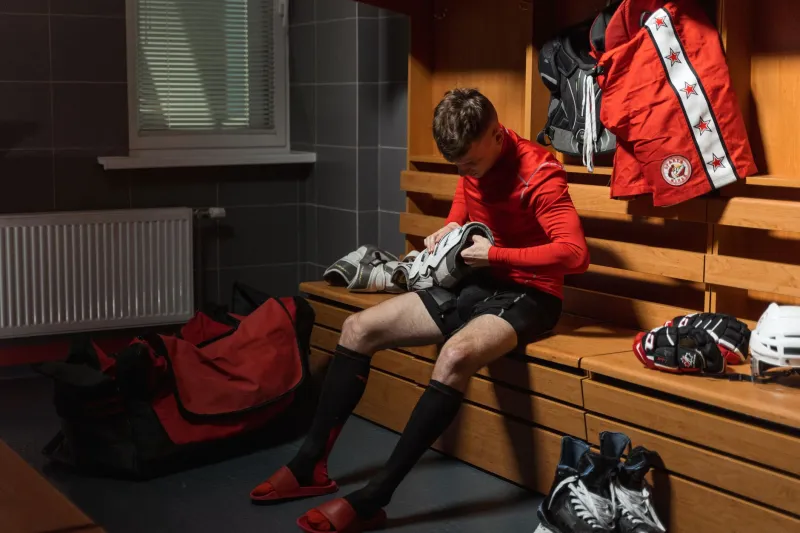
That step forward, in virtually every case, was taken in a gym, a backyard, a community rink at six in the morning, or a hallway with a synthetic tile and a stick blade. It was taken alone, or with a single training partner, with no audience and no immediate reward.
Micro-Goals: The Architecture of Invisible Progress
One of the most effective frameworks adopted by leading Canadian hockey academies is the use of micro-goal structures—specific, short-cycle objectives that break the development calendar into manageable, trackable segments.
Rather than setting a broad seasonal goal such as "improve my shot," a player operating within a micro-goal framework might commit to the following over a two-week block: complete 200 wrist shot repetitions from the off-wing position, film 10 of those sessions from a consistent camera angle, and review footage against a defined technical checklist before the next session begins.
The specificity matters enormously. Vague intentions dissolve under fatigue and distraction. Precise, bounded targets create accountability that does not require an external authority figure to enforce. The player becomes their own standard-bearer—a quality that, not coincidentally, is exactly what scouts mean when they use the phrase "self-driven athlete."
Programs affiliated with Hockey 360 Développement introduce micro-goal frameworks as early as the bantam level, conditioning young athletes to think in short cycles and assess their own output honestly. By the time these players reach the midget or junior recruitment window, they have years of practice at holding themselves to account.
Tracking Systems That Tell a Story
Documentation is the bridge between invisible effort and visible credibility. A player who trains diligently but keeps no record of that training cannot demonstrate growth in any concrete way. A player who tracks consistently builds what development professionals sometimes call a "progress narrative"—a documented arc that communicates seriousness and self-awareness to anyone evaluating them.
The tools available to Canadian junior and youth players have expanded considerably. Simple training journals remain effective, particularly when structured to capture not just what was done but how it felt, what broke down, and what the next session will address. Digital platforms designed for athlete self-monitoring allow players to log skating metrics, off-ice conditioning benchmarks, and skill-specific repetition counts in ways that are easily reviewed and shared.
Video, in particular, has become a foundational tracking tool. A player who films a skating drill at the beginning of October and again at the beginning of January possesses something genuinely valuable: visual evidence of change. That footage, shared with a coach or included in a recruitment package, communicates a level of intentionality that a highlight reel of game moments cannot fully replicate.
The Self-Assessment Discipline
Perhaps the most underrated component of off-season development is the capacity for honest self-evaluation. It is a skill that must be taught and practised, and one that separates athletes who plateau from those who continue to ascend.
Effective self-assessment is not self-criticism. It is a structured, relatively dispassionate process of comparing current output against defined benchmarks and identifying the specific gap between where a player is and where they need to be. Canadian programs that do this well typically provide players with position-specific rubrics—detailed descriptions of what a technically sound skating stride looks like, what efficient puck protection requires, what a high-release shot demands mechanically—and then ask players to evaluate their own execution against those criteria.
The honesty required is not easy. It is far more comfortable to review a training session and conclude that things went reasonably well. The discipline lies in finding the precise element that was not yet right and returning to it the next day with a specific corrective intention.
Over months, this discipline compounds. Players who self-assess rigorously improve faster than those who do not, and they arrive at evaluation events with a clearer understanding of both their strengths and the areas they are actively working to address—a self-awareness that coaches and scouts find immediately apparent in conversation.
Converting Quiet Work Into a Competitive Identity
There is a cultural dimension to this conversation that deserves acknowledgment. Canadian hockey has a deep, genuine tradition of hard work—of players who embrace early mornings, outdoor rinks in January, and the unglamorous repetition that the game demands. That tradition is not a cliché. It is a foundation.
What modern development programs are adding to that foundation is precision. It is no longer sufficient to simply outwork the competition in terms of raw hours. The player who outworks and out-thinks, who tracks and adjusts and documents and self-assesses, is the one who compounds their effort most efficiently.
At Hockey 360 Développement, the philosophy is direct: the work done when no one is watching is not supplementary to a player's development story—it is the story. Showcases and tournaments are the moments when that story becomes visible to the outside world. The chapters, however, are written in quiet gyms and empty rinks across Canada, one intentional session at a time.
For young players navigating the competitive landscape of Canadian hockey recruitment, the message is both demanding and clarifying: the invisible months are not a gap between opportunities. They are the opportunity.