Quiet Proof: How Canadian Hockey Players Build a Scouting Case Without the Marquee Stage

There is a version of the recruitment story that most young Canadian hockey players imagine: the breakout performance at a high-profile showcase, the agent's phone ringing the next morning, the offer that changes everything. It is a compelling narrative. It also describes a very small percentage of the athletes who actually earn opportunities at the next level.
The more common story—and in many ways the more instructive one—belongs to the player who was never in the room when the spotlight came on, yet somehow ended up on every serious evaluator's list anyway. Understanding how that happens is not just useful. For the majority of developing players in this country, it is essential.
The Illusion of the Perfect Stage
Canadian hockey culture has long celebrated the marquee moment. AAA tournaments, provincial championships, and nationally televised games carry enormous weight in the collective imagination of the sport. Scouts do attend these events. Coaches do form impressions there. But decision-makers at the junior, university, and professional levels are not passive observers waiting for talent to announce itself. They are active researchers, and their work extends far beyond the rink boards of a showcase weekend.
What this means in practical terms is that the player who assumes visibility requires a prestigious platform is operating under a significant misconception. The athlete who understands that evaluation is ongoing—and that evidence accumulates across every level of competition—holds a strategic advantage that most peers have not even considered.
Consistency in Less-Visible Competitions
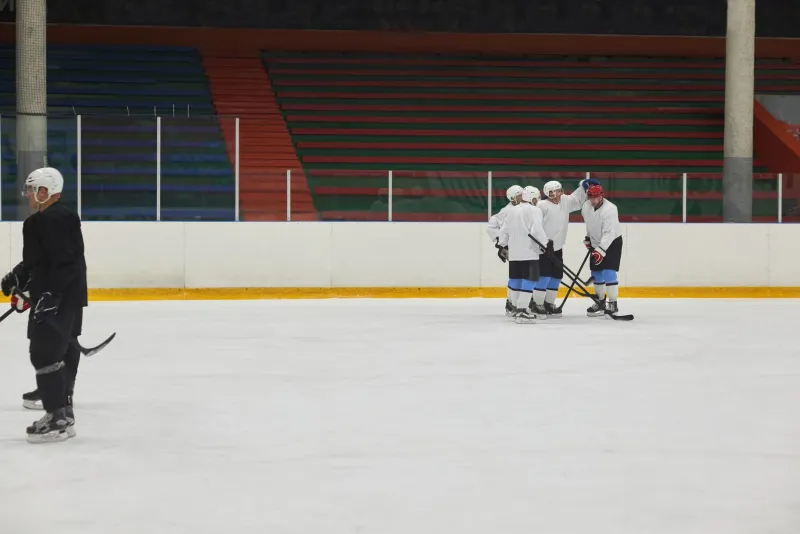
Performing well in a lower-profile league or regional tournament is not a consolation prize. It is a data point. Scouts and coaches who are serious about building rosters know that high-pressure, high-profile environments can distort individual performance in both directions. A player who dominates in a mid-tier league, game after game, over a full season, is demonstrating something that a single showcase appearance cannot: sustained excellence under varied conditions.
For young players currently competing in leagues that feel invisible to the wider hockey world, the directive is straightforward. Treat every shift as though it is being recorded—because increasingly, it is. Bring the same intensity to a Tuesday night game in a half-empty arena that you would bring to a nationally attended tournament. Evaluators who are genuinely thorough will find the footage, speak to the coaches, and draw their own conclusions. Give them something worth finding.
Building a Documented Record
One of the most underutilised tools available to developing Canadian players is film. Not film produced by a league or a tournament organiser, but deliberately assembled footage curated by the athlete and their family or coaching staff.
A well-constructed highlight package does more than showcase skills. It tells a story of progression. A scout reviewing footage from a player's midget season alongside clips from the current year can observe improvements in skating mechanics, positioning, decision-making under pressure, and physical development. That arc—the visible evidence of a player who is not just talented but actively improving—is frequently more persuasive than raw ability alone.
At Hockey 360 Développement, we work with players to understand that documentation is not vanity. It is evidence. Keeping a personal archive of game footage, supplemented by practice clips and off-ice training records, creates a portfolio that can be shared with coaches and scouts at any point in the recruitment cycle, not just during the narrow window of a showcase event.
Measurable Improvement as a Competitive Asset
Scouts evaluating young players are not simply asking, "How good is this athlete today?" They are asking, "How good will this athlete be in three years?" The answer to the second question is almost always more important than the answer to the first.
Measurable improvement—tracked through skating assessments, strength and conditioning benchmarks, on-ice statistics, and coach evaluations—provides a concrete answer to that second question. A player who can demonstrate a significant improvement in their 40-metre sprint time, a meaningful increase in shot velocity, or a sustained rise in their points-per-game average over consecutive seasons is presenting an argument that no highlight reel alone can make.
This is where structured development programming becomes genuinely valuable. Programmes that track athlete metrics systematically, and provide players with the documentation to present those metrics to evaluators, are equipping their participants with a recruitment tool that is both rare and persuasive.
Character as a Scouting Variable
No serious evaluator at the junior or post-secondary level is making decisions based on skill alone. Character, coachability, and leadership potential are variables that appear on every internal scouting report, even when they are not formalised in a public rubric. The challenge is that these qualities are difficult to demonstrate outside of the environments where evaluators are watching.
Or are they?
A player who is consistently described by coaches, officials, and teammates as reliable, composed, and committed to the team's success builds a reputation that travels. The hockey world in Canada is smaller than it appears. A coach in one region speaks to a coach in another. A minor hockey director mentions a player's name to a junior programme's general manager. These informal networks carry significant weight in the recruitment ecosystem, and they are built through behaviour over time, not through a single impressive weekend.
Demonstrating character in less-visible settings—taking responsibility after a poor performance, supporting teammates through adversity, maintaining effort when the game is already decided—creates a narrative that scouts and coaches actively seek when they begin making enquiries.
Communicating Directly and Professionally
There is nothing passive about a well-executed recruitment strategy. Players who wait to be discovered are ceding initiative to circumstances they cannot control. Players who take a proactive, professional approach to communicating their development—through direct outreach to coaches, organised player profiles, and consistent follow-up—are shaping their own narrative.
This does not mean flooding inboxes with unsolicited messages. It means crafting a clear, honest, and professionally presented case: a brief introduction, a link to current footage, a summary of measurable progress, and a genuine expression of interest in the programme. Coaches at every level receive far fewer of these well-prepared communications than they should. The ones they do receive tend to be remembered.
The Long Game Is the Right Game
The recruit nobody sees coming is not invisible by accident. They are simply building their case through channels that receive less attention—and doing so with the same rigour and intentionality that high-profile players bring to their marquee moments.
For young Canadian athletes who feel overlooked, the response is not frustration. It is strategy. Document your progress. Perform consistently wherever you compete. Let your character speak through your conduct. Build a professional profile and use it deliberately.
The spotlight will find the players who have already done the work. The only question is whether you will be ready when it does.