What's Actually Happening on the Ice: A Parent's Guide to Evaluating Whether a Hockey Program Builds Thinkers or Followers
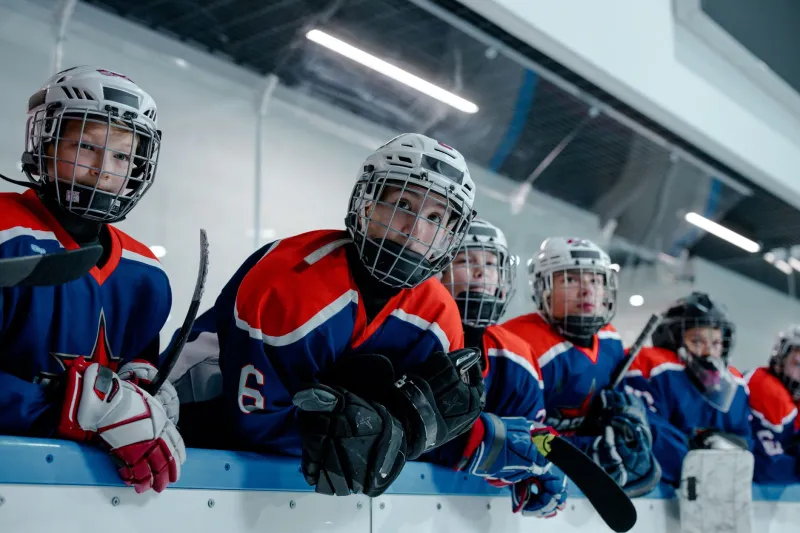
Every Saturday morning across Canadian arenas—from Lethbridge to Sault Ste. Marie—parents line the glass with the same instincts: count the shifts, track the goals, watch for smiles after the final buzzer. These are natural impulses. But they miss the most important question a parent can ask about a hockey development program.
Is my child learning to think?
Not to skate faster. Not to shoot harder. To think—to read a play before it unfolds, to make independent decisions under pressure, to adapt when the structure breaks down. These are the cognitive skills that separate players who plateau at bantam from those who continue evolving into their late teens and beyond. And they are almost invisible to the untrained eye—unless you know exactly what to look for.
Why Cognitive Development Rarely Appears in a Program's Marketing
Most hockey academies in Canada lead with what's measurable: win-loss records, alumni in the OHL, power skating certifications, ice hours per week. These metrics are not meaningless, but they tell you very little about the learning environment your child will inhabit for the next one, two, or three seasons.
A program can accumulate wins by having bigger, faster players—not smarter ones. A player can log enormous ice time while being told exactly where to stand on every single shift. The numbers look impressive. The developmental outcome may be hollow.
The programs that produce elite-level thinkers tend not to advertise the fact. They simply build environments where players are required to solve problems—repeatedly, progressively, and with appropriate consequences for both good and poor decisions. Spotting those environments requires a different kind of observation.
What to Watch During Practice, Not Just Games
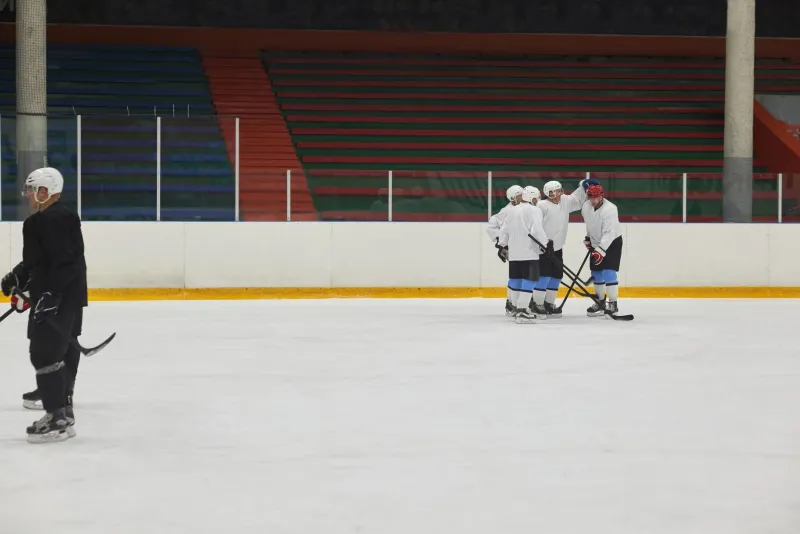
The game is where skills are displayed. Practice is where they are built—or not. When you observe a practice session, resist the instinct to evaluate individual players. Instead, watch the coach.
Does the coach ask questions, or only give answers?
A coach who consistently stops play to demonstrate the correct positioning is delivering information. A coach who stops play and asks, "What did you see there? What were your options?" is building a player who will eventually make that assessment independently. The latter approach is slower and messier in the short term. It is also far more valuable.
How much silence is there between instructions?
This sounds counterintuitive, but deliberate pause—giving a player time to process a mistake or a success before the coach intervenes—is a hallmark of cognitively sophisticated coaching. Programs that fill every moment with instruction are often inadvertently training players to wait for direction rather than generate it themselves.
Are drills closed or open?
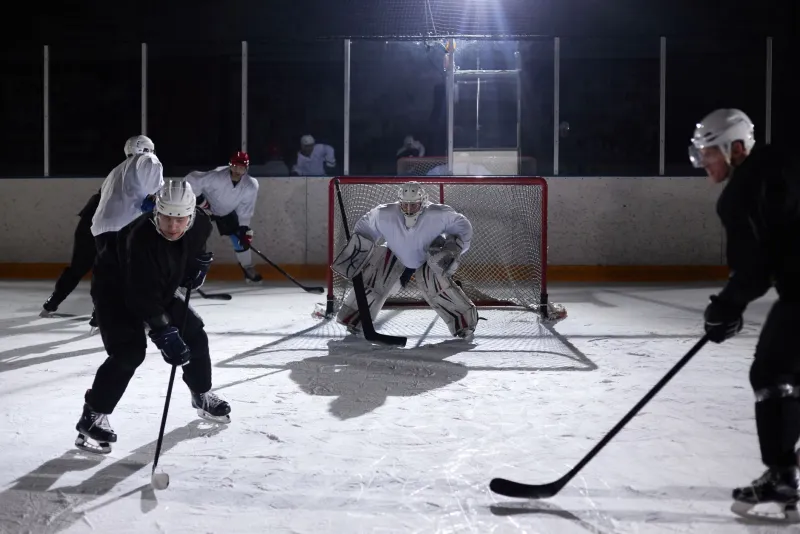
A closed drill has a fixed, predictable structure: skate here, pass there, shoot, repeat. These drills have their place in building technical habits. But a program built almost entirely on closed drills is building players who function well in controlled conditions and struggle when the game deviates from the script—which it always does. Open drills, small-area games, and scenario-based exercises require players to read and react rather than execute a memorised sequence. Watch the ratio.
The Vocabulary of the Bench
Pay attention to the language used when a player makes an error. This is perhaps the single most revealing indicator of a program's developmental philosophy.
A program that responds to mistakes with corrections—"You should have gone wide," "That's the wrong read," "Stay in your lane"—is building compliance. The player learns to avoid the mistake by following the instruction. But they have not been given tools to understand why the read was wrong, or how to arrive at a better decision next time without external prompting.
A program that responds with curiosity—"What did you see that made you take that route?" or "What would you do differently if the same situation came up?"—is building reasoning. The player is being asked to examine their own decision-making process, which is the only way that process actually improves.
This distinction matters enormously beyond hockey. The young athlete who learns to examine their own decisions, to tolerate the discomfort of being wrong and to self-correct, is developing a cognitive habit that will serve them in every competitive environment they enter for the rest of their lives.
Questions Worth Asking During Your Program Evaluation
When you visit a hockey academy or development program—whether it is a spring camp, a full-season academy, or an elite skills programme—bring a short list of direct questions. The answers will tell you more than any facility tour.
-
How do your coaches respond when a player makes a decision-based error during a game? A strong program will describe a reflective process. A weaker one will describe a correction.
-
What percentage of your practice time involves small-area or decision-making games versus structured technical drills? There is no universally correct ratio, but a program that cannot answer this question has likely not thought carefully about it.
-
How do you teach players to self-evaluate after a shift or a period? The best programs have structured tools for this—journals, video review habits, guided reflection prompts. Programs that rely solely on coach feedback are creating players who depend on external validation to understand their own performance.
-
What does player leadership look like in your program? Leadership is not a title or a captaincy. It is the ability to influence a situation without being directed to do so. Programs that genuinely develop leaders will have concrete examples of how they create environments where players exercise independent judgment.
The Longer Game
It is worth stating plainly: programs that prioritise cognitive development often do not produce the most visually exciting bantam or midget teams. Decision-making drills are messier than structured line rushes. Players who are encouraged to take risks and think independently will make more errors in the short term than players who are told exactly what to do.
This is uncomfortable for parents conditioned to measure success through wins. It requires a certain patience and a longer view of what development actually means.
But consider what you are preparing your child for. If they are fortunate and talented, they may play into their late teens or early twenties at a high level. The cognitive skills they build now—the ability to read a situation, make a decision, assess the outcome, and adapt—will define not only their ceiling as a hockey player but their capacity as a student, a professional, and an adult.
A program that builds thinkers is not just developing hockey players. It is developing people.
Know the difference before you sign the registration form.